Richard and Judy. And Me. Warning: may not contain impartial journalism

I promised my publicist I wouldn't actually sit on their laps

I have a friend who says being an author is basically being paid to be disappointed once a year. There have been years when, I have to admit, I have almost agreed with him.
This is not one of those years.
Perhaps it should have been. I began my ninth novel – Six Month Contract – out of contract. It is fair to say that even when starting it I knew the book would not be an “easy sell”. Books about quadriplegics tend not to be, especially when you throw in the words ‘carer’ and ‘Dignitas’. When I tried to describe the plot, people gave me the same look you give the woman who sings songs on the bus and tries to show you her socks.
Even when I finished it and Penguin – that iconic publisher – bought it, I still felt anxious. There were brow-furrowed discussions about how best to pitch it. “This may be the book that kills my career!” I would joke to friends. And a little muscle would tick in my jaw and my voice would go a little bit too high.

Can you feel my nerves from there? You can?


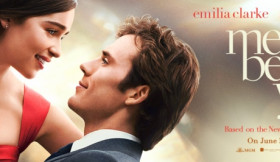
Today, eighteen months after I finished it, I sat on a sofa under studio lights discussing it with Richard and Judy. Yup, the Richard and Judy. Because Me Before You, as 6MC is now titled, has made it onto the R&J book list for Spring 2012 and I’m having one of those rare moments where you feel so nauseatingly delighted and grateful you could do an actual free-form Dance Of Joy*.

As any author will tell you, the R&J list is, even without the television show, the biggest possible boost to a novel. But more importantly – it’s RICHARD AND JUDY. I watched them when I was a student, when I worked nights, pinned to a sofa as a nursing mother. These days I follow Richard on Twitter (he tested me on Binky’s epic scaling of unopened letters) and I tried very hard not to make a complete gushing arse of myself.
I failed.

Because this is the thing about Richard and Judy: if you are of a certain age, you think you know them. You’ve read about Judy’s womanly ops, and you’ve winced at Richard’s cheesy jokes and you’ve scorched your eyeballs with his Ali G impression and it’s like meeting members of your family. Iconic members of your family. Members of your family that make you sweat with nerves. (‘Why are you so nervous?’ My husband had asked that morning. ‘You’ve met far more famous people.’ Me (incredulous face): ‘It’s RICHARD AND JUDY’)
I told myself this was stupid. I asked myself: What would Sebastian Faulks do? (answer: not say the word ‘arse’ within thirty seconds and get mildly hysterical when the microphone dropped down his top).
But, like the absolute professionals they were, they warmed me up with five minutes of friendly chat and then, on camera, talked knowledgeably and with enthusiasm about the book. They used the word ‘quadriplegic’ without fear. Judy (who has enviable hair, btw) said it made her both laugh and cry. They wrote nice things in my copy and joked about finishing their own books (they are both writing novels). They were, frankly, exactly as you would expect from their screen personas. I came out beaming, and without once involuntarily blurting out OHGODILOVEYOUBOTH.
I can’t really say anything else about today that won’t make me sound like even more of an idiot than I already do. My gushing adoration of Jilly Cooper during an interview last year showed me that when faced with one of my idols I will never be a ‘cool’ person (and I have to face the fact that this will now be evident on film).
But discussing the book that should have killed my career with Richard and Judy (RICHARD AND JUDY!) showed me that yes, publishing can often mean being paid to be quietly disappointed. And that every now and then, if you’re lucky, you have a moment that makes you feel like anything is possible.

The book is out now. I hope you enjoy it.

...other good books are available

*I may have done such a dance. So shoot me.

The Alternative Best Books of the Year 2011

I love broadsheets (I have to; one pays half my mortgage) but this weekend I read my way through the annual Best Books of 2011 features and found my jaw clenched so tight I feared for my tooth enamel.

Were they a smorgasbord of unheralded literary – and not so literary – delights? Did they enlighten me? Point me to places in Waterstones I might not otherwise have sought? Did they heck as like. The choices of of Margaret Drabble? Julian Barnes? Alan Hollinghurst? CHECK. Books by Julian Barnes? Alan Hollinghurst? Margaret Drabble? Ohhh yes. *pause for weary sigh *
Some lists were more imaginative, but the same names popped up with wearying regularity. Antonia Fraser and Andrew Motion, John Banville and Hilary Mantel… you get the picture. All of these people are amazing writers, yes. Their talent is indisputable; it’s no doubt why they make so many repeat appearances in these pages. But I can’t help feeling these features are a rather weary ring-round of the same old faces. They feel, to me at least, increasingly like an irrelevance, with no energy or surprises; a waste of an opportunity.
I thought of the books I’ve enjoyed this year; often books by people who don’t appear in the broadsheets. Where were the commercial novels, the funny books, the first novels, the graphic novels? Where was Caitlin Moran’s critically lauded feminist tract How To Be A Woman? Or Alan Partridge? Where were the phenomenally successful authors that we never see in these pages? Writers like Sophie Kinsella or Jodi Picoult? I’d LOVE to know what they are reading. I’d even like to know what Katie Price is reading. I’d actually be reassured to find that she actually reads books.
I’ve just read my way through 30-odd first novels for the Costa Book Awards, and many of them I have since pressed on people, delighted to have found amazing new voices, unheralded books I’d never have read otherwise. (I think I saw ONE of these in the books pages)
Taking all this into account, I thought I’d open the floor for some of my favourite writers – and readers – to submit their own. I’ve kicked off with some of my own (I’ll no doubt kick myself for those I’ve forgotten) Please do add to the list.

Mine: ( from the Costa Shortlist:)
City of Bohane by Kevin Barry: an extraordinary, rollicking and perfectly plotted swagger through a post-apocalyptic Irish turf war.
Tiny Sunbirds Far Away by Christie Watson: rich, gripping (and very funny) family saga told by a girl sent to live with her grandparents in Congo.
The Last 100 Days by Patrick McGuinness: If anyone had told me I would be gripped by a tale of Caucescu’s Romania I would have laughed. But this is a fascinating and wryly humorous tale of an innocent abroad.
Pao by Kerry Young, an epic tale of multicultural Jamaica and of a young man negotiating his way through its fledgling political system.

Excluding books by people I know (for obvious reasons), I also loved Mennonite in a Little Black Dress by Rhoda Janzen, which made me laugh until my stomach hurt, Essie Fox’s The Somnambulist, and Charles Frazier’s Nightwoods, whose sentences I kept pulling apart just to study their brilliance.
I also really enjoyed the Alex Rider graphic novels, which I’ve been reading with my sons. Gripping and beautifully drawn.

Stella Duffy, author of Theodora: Actress, Empress, Whore: “One of the novels I most enjoyed this year is Zoe Strachan’s novel “Ever Fallen in Love” (Sandstone Press) for many reasons, not least the smart pace and lovely writing, but also for its honesty about relationships (family and romantic), a welcome take on the university novel from a different class perspective (not about posh kids finding themselves at Oxbridge – woo hoo!) and for proving it is possible to set a ‘gay novel’ outside a major metropolis.”

Jenny Colgan, author of Meet Me At The Cupcake Café The book about the world economic crisis, Boomerang, by Michael Lewis, is gripping reading, and essential for anyone trying to get a grasp on where we are, financially speaking. The Big Short, his previous book, is even better. He’s an absolutely peerless journalist on the trail of the biggest story of his life.

The Pile of Stuff at the Bottom of the Stairs was funny, sad and compulsive, and SJ Watson’s Before I Go to Sleep was as clever and engrossing a thriller as I can think of. Like most of the rest of the world, I dived into A Game of Thrones for months on end and started muttering ‘winter is coming’ ominously in response to almost any question. But the book (although it was published in 2010) that most took my breath away, made me heartbroken, then overjoyed this year was completely unpredictable- it was Andre Agassi‘s staggeringly honest, sad, frank, fascinating autobiography, Open. Whether you’re a tennis fan is immaterial; if you’re a life fan, you have to read this book.

Chris Manby, author of Kate’s Wedding: I’ve just finished reading Jeanette Winterson’s memoir ‘Why be happy when you could be normal?‘ in which she talks about the childhood that inspired ‘Oranges are not the only fruit’ and her recent search for her birth family.  It’s a wonderful read.  Laugh out loud funny at times.  Twist of the guts sad at others.  Winterson writes about the importance of the written word as a means of escape.  She says, ‘I believe in fiction and the power of stories because that way we speak in tongues.  We are not silenced.  All of us, when in deep trauma, find we hesitate, we stammer; there are long pauses in our speech… we get our language back through the language of others.  We can turn to the poem.  We can open the book.  Somebody has been there for us and deep-dived the words.’

I never imagined I had much in common with Jeanette Winterson but it turns out that I do.  We’re both adoptees, unlikely Oxford graduates and novelists. On the subject of adoption and the long shadow it casts over the lives of everyone involved, I found that Ms. Winterson had certainly ‘deep-dived’ the words for me.

Terms and Conditions for the Penguin video competition…

TERMS AND CONDITIONS
1. No purchase necessary to enter the competition.
2. This competition is open to UK residents aged 18 years or over, with the exception of employees of the Promoter, their families, agents and anyone else connected with this promotion.
3. Entries must be received by midnight on Friday 11th November 2011. The Promoter accepts no responsibility for any entries that are incomplete, illegible, corrupted or fail to reach the Promoter by the relevant closing date for any reason. Proof of posting or sending is not proof of receipt. Entries via agents or third parties are invalid. Entries become the property of the Promoter and are not returned.
4. Only one entry per person. No entrant may win more than one prize.
5. To enter write 50 words about what makes you a Jojo Moyes fan. Email your entry to marketing@penguin.co.uk , giving your message the title “Trailer Entry”
6. All correctly completed entries will be forwarded to a judging panel made up of the marketing director, publicity director and managing director of Michael Joseph at Penguin books. They will select 10 successful entrants. The winning entries will be the entries that in the opinion of the judges show a clear passion for Jojo Moye’s books and an interest in women’s fiction.
7. The winners’ prize is the opportunity to take part in our book trailer shoot on Saturday 10th December at Penguin Books offices in central London. Promoter will reimburse each winner for any reasonable travel expenses that they incur in attending the trailer shoot but no additional expenses will be covered. In the event that you cannot make these dates, no alternative dates will be possible and the Promoter reserves the right to offer the prize to a substitute winner.
8. Prizes are subject to availability. In the event of unforeseen circumstances, the Promoter reserves the right (a) to substitute alternative prizes of equivalent or greater value and (b) in exceptional circumstances to amend or foreclose the promotion without notice. No correspondence will be entered into.
9. The winners will be notified via email by Tuesday 15th November. The winner must claim their prize within 14 working days of the Promoter sending notification. If the prize is unclaimed after this time, it will lapse and the Promoter reserves the right to offer the unclaimed prize to a substitute winner selected in accordance with these rules.
10. By entering this competition each entrant confirms that his/her entry is their wholly-owned creation and to the extent that such entry makes use of any third party materials that these have been fully cleared unless they are no longer protected by copyright or other intellectual property rights. Entrants will keep the Promoter harmless from any claims in relation to their entry that the entry infringes the personal or proprietary right of any other person. By submitting an entry, each entrant (or their parent/guardian on their behalf) grants to the Promoter a perpetual, royalty-free, non-exclusive licence to edit, publish, translate, modify, adapt, make available and distribute the entry throughout the world in any media now known or hereafter invented. Each entrant (or their parent/guardian on their behalf) undertakes to complete any necessary documentation to formalise the licence. If you do not want to grant us these rights, please do not submit materials to us.
11. To obtain details of the winners please email marketing@penguin.co.uk stating the name of the competition in the subject heading 4 weeks after the closing date.
12. The Promoter will use any data submitted by entrants only for the purposes of running the competition, unless otherwise stated in the entry details. By entering this competition, all entrants consent to the use of their personal data by the Promoter for the purposes of the administration of this competition and any other purposes to which the entrant has consented.
13. The winners agree to take part in reasonable post event publicity and to the use of their names and photographs in such publicity.
14. By entering the competition each entrant agrees to be bound by these terms and conditions.
15. The Promoter is Penguin Books Limited, 80 Strand, London WC2R 0RL.

Me Before You, out Jan 5 2012

Top Girls

Top Girls

Yes, it's feminist drama, but still entertaining! (picture courtesy of The Guardian)

I’m not a huge theatregoer. I struggle to dispel the suspicion that a lot of it is more fun for those taking part than those paying to watch. I loved War Horse enough to watch it twice; but then it’s hard to believe that life-sized wooden horse puppets are getting anything from being ogled by me and 600 blubbing middle-aged provincial women.
Despite all this, yesterday me and my prejudices headed for London with a friend to see one of the last performances of Caryl Churchill’s resurrected Top Girls. Challenging, modernist drama! Feminist drama! I know. I can feel your waves of envy from here.
And it’s fair to say I was a bit trepidatious. Olivia Poulet, who stars as three different characters, and who, for reasons too complicated to detail here, I was about to meet, had warned me that the first act was “a bit trippy”. She wasn’t wrong.
A 14th century Viking woman sits at a dining table with, amongst others, a female pope (the wonderful Lucy Briers), a geisha, a Scottish philanthropist (Stella Gonet), and a 1980s Joan-Collins lookalike played by the exquisite Suranne Jones.
The talk overlaps, the timing stagey and unnatural, so that it takes about ten minutes for the brain to adjust to both the surreal setting and the choppy bursts of dialogue. Uh-oh, I thought. This is going to be a long evening. And then, suddenly, I, and the rest of the audience were sucked in.
In fact, I was gripped by this production, which has been critically well reviewed by both the Guardian and the Daily Telegraph (not a publication known for its love of surreal 30-year-old feminist stage productions).
The shoulder pads and “we-must-act-like-men-to-succeed” schtick may feel a little dated, but it hasn’t lost its power to shock. The second act features two young girls in a Norfolk garden. At one point one apparently licks menstrual blood from the other’s finger; a moment which prompted the whole of one side of the audience to shriek with revulsion. (Um, guys, it’s not, you know, real)
But it is also moving in its examination of the price women pay for success, and what they are prepared to tolerate. It is especially poignant in its treatment of Poulet’s character, a young woman who is plainly doomed to fail in the new, cold, go-getting climate of the 1980s. What seemed most extraordinary to me was the way Poulet seemed to physically alter with each character; here solid, plump and plain, here as a secretary ten years older, desperately trying to fit a higher social bracket. “It’s what good character actors do,” my companion, who is familiar with the ways of thesps, told me.

It's not real blood, people. You're quite safe.

I had arranged to meet Olivia in the pub afterwards. And that was the biggest surprise. I turned from my drink as the door opened, waiting to see the woman I had witnessed on stage, and looked away. That slightly lumpen creature couldn’t be this slight, pretty girl standing in the Clarence? But it was. This wasn’t a matter of make-up, or prosthetics; just that weird alchemistic way of seeming, temporarily, to inhabit somebody else’s skin.
I had a great night, for lots of reasons. In part because it is fun, when you spend much of your working life alone, to hang out with other writers, and especially with actors, who are a different tribe entirely. In part because of the ‘rock’n’roll’ taxi me and my companion got home. But for that brief, mildly bewildering experience of human morphing alone, the evening would have been worth it.
It’s on until the end of the month. Do catch it, if you get the chance.

How to stay bonny in Scotland: the Turnberry Luxury Reading Weekend

Damian Barr, Jojo Moyes, Turnberry Resort

Me and Damian. Yup, it's tight. And that was *before* dinner.

I am a quarter Scottish. My segmented heritage shines through in my peelly wally complexion, my love of haggis, and my grandmother’s Mac-based surname. Despite this, I have only been to Scotland once. So when Damian Barr, salonniere of the much-feted Shoreditch Salon, asked me to be the guest author at the Turnberry Luxury Reading Weekend, I jumped at it.
The Turnberry weekend is a relatively new concept, borrowed from a similar event at Tilton House. It combines five star accommodation with serious food, a private dinner with an author (in this case, me; for the lucky predecessors: David Nicholls) and a lot of lying around in a very nice hotel chatting with other like-minded people. If your normal weekend is spent wrangling children and other large animals, eating fish fingers and shouting at X Factor, then it is, as the young people say, a no brainer.
For the first time in my life I was offered a loan dress, from the vintage dress agency Juno Says Hello. They sent me three in a black box lined with black tissue and when it arrived I had a nanosecond of understanding how it might feel to be one of those film stars who gets sent stuff for the red carpet (except mine was for a dining room in Ayrshire)
The dress is a 1950s shape and has mink sleeves (before you pelt me with eggs, they are possibly fake) and it has the tiniest waist I have worn since pre-children (ie prehistoric) days.
I was SO excited to fit it that I didn’t actually read the itinerary for the weekend. I should have done; it contained the words: Chef’s Tasting Menu – Five Courses.
Have you ever eaten five courses while acutely conscious of not just your waistband, but every, straining invisibly-sewn seam therein? I have. On the first night (1st course: welsh rarebit, pot of posh baked beans, three fried eggs with truffle shavings. Yup, I did say first course) I was wearing a Vivienne Westwood skirt and jumper. By course three (Gyozo dumpling in Bovril and smoked spring onion reduction) I knew I was defeated. And by course five (posh chocolate sundae with home-made marshmallows. I know, this is why I’m not a food writer) I was pleading for a waistband amnesty.

Jojo Moyes, Damian Barr, Turnberry Resort

The dining room. Yes, I know I should have taken pictures of the food. But I was too busy eating it.

By day two I had learned my lesson. I eschewed the Burns Breakfast (haggis and hollandaise sauce) and spent the afternoon walking determinedly with two of the guests; Sophia and Carol. (We talked so much that we managed the rare feat of getting lost between the hotel and the sea – in a hotel which actually looks out on the sea). I only ate two puddings at lunch. I sweated in the steam room.
And yes, I made it into the dress. The dinner was astonishing. I can’t even describe it other than it involved, at various stages, foie gras, crab, and 24hr cooked Orkney lamb. I talked books, read from my book Me Before You for the first time, and then got so overexcited by the audience reaction that I insisted on reading them more of it. Possibly half the book. They were very patient.
It was a really special weekend. I’d highly recommend it, if you want a break from normal life, and a landscape that you might be unfamiliar with (the great island rock Ailsa Craig looms unexpectedly out of the sea depending on weather conditions; herons swoop by like pterodactyls. The golfers are friendly). Even travelling home on a budget airline didn’t put me off.
And I was so relieved that I had not split the dress from bust to hem, as I probably deserved, that when I got home I emailed Juno Says Hello and bought it.
I may well wear it for the Costa Book Awards in January (I am a judge). But I’ll check the menu first.


Turnberry, lighthouse

To the Lighthouse (avoiding all golfers on the way)

Meeting your heroes (part 2)

Jilly Cooper, Jojo Moyes, dogs

Why, yes, I *do* like dogs. (pics by the very wonderful Andrew Crowley)

It’s dangerous meeting your heroes, especially literary ones. At a party, I once spied one of my favourite writers; someone whose writing had inspired me to do it myself, whose work I could quote paragraphs from, like an embarrassing student. “Go and say hello,” my agent urged, when I told her what this woman meant to me.
I said hello.
Reader, she could not have brushed me off more effectively if she had been holding a dustpan and brush and been called Basil. Twenty seconds later, I walked back to my agent, mortified. “She’s probably shy,” my agent said, firmly. I have never been able to read this woman since without the faint metallic taste of mortification in my mouth.
So it was with some trepidation that I agreed to interview Jilly Cooper and her husband for the Daily Telegraph. I have loved Cooper since I was twelve (even though her description of Rupert Campbell Black “batting a bread roll with his cock” destined me for years of disappointment). Unusually for someone of her fame, I have never met a single person with a bad word to say about her.
It was only driving to their house that I really thought about the fact that I there not just to interview my hero, but to dissect her marriage. In one day. Yup – that’s always a good way to endear yourself. I started to imagine some hack turning up on my doorstep and analysing my marriage based on one day’s experience, and it made me go cold.

Jojo and Jilly

I am not pleased to be here at all. Oh no.

Anyway, having said all that (and at the risk of drawing down the wrath of the blog-reading gods) I don’t want to talk too much about the day itself. There’s a sort of account of it here. They tolerated my intrusive questions with astonishing grace. But I will say that it started with an embrace of the kind that you don’t normally get from a global literary superstar and only ended when I realised, lolling outside in the unseasonal Cotswold sun, that I should have been on the road hours ago and that as Jilly would plainly never be impolite enough to suggest one should leave, it was going to be up to me to extricate myself from the Cooper household.
I left like a limpet being prised from a rock. I’m guessing it’s a fairly common response among their guests.
I wrote the piece, then spent another week in a state of mild anxiety. She would hate it. My shorthand would be inaccurate. The subs would change my words. Either way, she would hate it.
Today the postman delivered an envelope addressed in looping handwriting to DARLING JOJO. Cooper is, of course, the kind of person who would greet a familiar roadsweeper with that regardless. But it is going with my prized things, my love letters and finger paint pictures and unidentified children’s teeth.
Sometimes meeting your heroes exceeds every expectation.

Letter from Jilly

Best. Post. Ever.

My Jolly Sooper Day

How to be utterly upstaged by a dog.

Too flat out to write the account I want tonight, but I just wanted to post this lovely picture by Daily Telegraph photographer Andrew Crowley, who took the shots for my interview with Jilly and Leo Cooper last week.

I especially love William the Dog on the sofa, who had to be restrained by no fewer than three people to prevent him from hogging the shots of Leo and Jilly together. His look of guilty pleasure when he was finally allowed in front of the camera was quite something.

The piece – the first interview Jilly and Leo have apparently given together in their 50 year marriage – will run in this weekend’s Daily Telegraph. It was one of the best – and most moving – days of my working life. I hope that comes across.

Sit down and put your feet up. You know you want to….

frazzles, crisps

This image will make perfect sense once you listen. There. Now you have to listen.


… and listen to this. The BBC commissioned me a while back to write a short story for radio about Twitter. I said yes – (I am a freelance; I say yes to almost anything as long as it doesn’t involve pain or pasties) – and then discovered that writing about 140 character dollops of conversation is actually far harder than you might think.

Anyway. I got there in the end; the lovely Claire White read it, and the even lovelier producer Kirsteen Cameron produced it. The title, Between The Tweets, was thought up by one of my twitter followers (she won one of my books! Hurrah!).

Like a smart alec, I assured my friends on Twitter that should they want to sit down and listen with a cup of tea it would be “better than a biscuit”. Cue infinte discussion on which particular biscuit (twitter is like that). Anyway – we came to the conclusion that it is better than a digestive, possibly better than a Custard Creme and on a good day, just as good as a Wagon Wheel. Not bad, eh? I bet Martin Amis would be happy to reach such a literary benchmark.

Click on the link below: it’s up on BBC’s iplayer for another seven days. Joanne Harris’s Twitter short story is on Thursday.

Oh. And I am doing something VERY EXCITING on Thursday. I can’t tell you about it until afterwards though because I am a superstitious soul and if I tell you it will obviously all fall apart.


bbc.in/n8K0dQ 


Daring to Bare


flasher

"What? You want me to show you everything?"

What would you tell a stranger about yourself? Would you reveal a secret obsessive compulsive disorder, or a long-held resentment against a member of your family? Could you tell them about cruel things you did in your childhood? Or how your husband fails to satisfy you in bed?
I wondered about this yesterday after reading an excellent piece about being an only child by The Times’s Janice Turner. I was one of many people to congratulate her on twitter afterwards, where she admitted that she felt peculiar about having been so honest. Writing something so personal, she said, left her feeling exposed.
Some of the best writing I’ve read of late has been of the self-exposing kind. I became friends with Twitter’s @belgianwaffling as a result of reading her astonishingly honest blog about marital breakdown. I admired the work of @52betty, whose blog about resurrecting a long-dead marital sex life was forensically, toe-curlingly real. I can quote whole phrases from Caitlin Moran’s How To Be A Woman, with its achingly beautiful chapters on adolescence, birth and abortion. And like many UK readers, I am mildly obsessed with the Mail’s columnist Liz Jones, and her inability to see how her habit of putting every bit of her life up for public scrutiny might contribute to her self-sabotaging of her own happiness.

It’s a curious thing to put yourself out there in print. It’s easy to forget that what can feel like a confidence between you and the keyboard may be read by a million people, many of whom may choose to judge you on the basis of it. But in the age of exposure, there are few writers who can avoid it.

At publication time, it is common to have a meeting with your publishers’ publicity dept, where they will ask you ‘if there is anything you can write about?’ What this really means, is ‘what can you tell us about your private life that may get us a slot in a national publication?”

I have played this game. I have written – albeit jokingly, and with my husband’s clearance – about marriage. I have written about secret crushes, disastrous family holidays, and the difficulties of good parenting. I recently wrote a piece about the underreporting of breast pain. I am, in percentage terms, perhaps 30 per cent out there. My own weapon against feelings of genuine exposure is humour – I find myself adopting a faux jokey style, telling the story against myself. You cannot judge me – haha! – it says – because I have already judged myself.

Both @Belgianwaffling and @52betty got around this by writing anonymously. I’m sure it contributed to the recklessly liberating tone of their writing. But autobiography removes that option. When @52betty went public after getting a book deal, part of me applauded but the other half curled up with vicarious anxiety. How do you talk to your neighbours after they might have read about your anal sex experiment? How do you chat to the man in the shop when he might have been reading about your weirdest fantasies? I couldn’t do it. I don’t know if it’s fearlessness, or a requisite layer of skin I’m missing, but I couldn’t.

Every time I mention my own life in print, I find I’m running through a mental checklist. Who could be hurt by this? How might it be misread? Could this ever be used against me? (I’m doing it now) What remains is generally slim pickings; what a former colleague used to call “trite shite”. So no, I do not write about the real stuff. I do not write about my children in any but the most general terms, especially not now they are old enough to be embarrassed by my words. I wrote about my youngest son’s cochlear implant because it was an impossible decision and we wanted to help other families of deaf children. And that, my husband and I agreed, was it. I shuddered at Julie Myerson’s The Lost Child and its exposure of her son during his difficult teenage years. Yes, her writing was beautiful but I couldn’t see past the sense of maternal betrayal to enjoy it. I don’t believe truth is everything if the writer is the one who holds all the weapons.

Some years ago I realised that my childhood was not ordinary (not many children kept a horse behind Hackney Town Hall, or had David Hockney draw them pictures). The writer part of me often plays with the material, knows I could make it compelling. But I also remember my mother telling me once how uncomfortable it made her when I wrote about our family; it removes from other parties a say in their own history. It leaves them both exposed and powerless.

So those words exist only in my head. Because, for now at least, the warning voice is louder. I don’t think my need to tell that story outweighs her need for peace of mind. Philip Roth may have been right when he said that when a writer is born “a family dies” – I suspect you can’t write honestly about life without hurting people. Possibly even yourself: I’m guessing that it would be possible to get so caught up in the writing of it, that you might lose track of how much of yourself you were laying bare.

It was telling that I recently had a pitch turned down by a magazine with the words: “It was interesting, but we really wanted something intensely personal”. My overwhelming feeling was not disappointment at the lost pitch, but relief. Better, safer, to slip the experiences into fiction. Or just keep them to myself.
Until I have another book to promote, obviously. In which case you can expect my “My Bullied Child Deviant Sex Horror” all over page three.